
15 Cool Indonesian Slang Words You'll Hear In Bali

Author
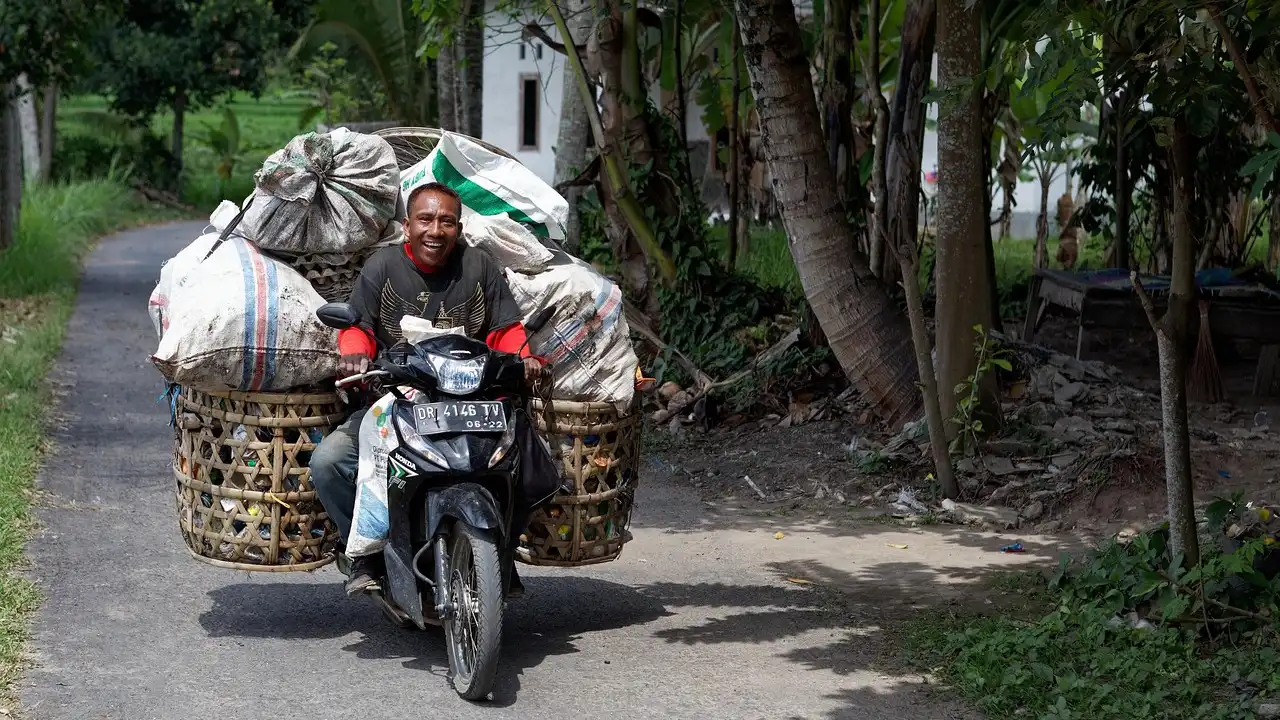
Have you ever studied Indonesian from a textbook, arrived in Bali or Jakarta, and felt like people were speaking a totally different language?
You aren’t alone.
Formal Indonesian (Bahasa Baku) is very different from the everyday language spoken on the streets (Bahasa Gaul).
If you speak like a textbook in a casual setting - like hanging out at a coffee shop or chatting with new friends - you might sound a bit like a robot or a formal news anchor.
To really connect with locals, you need to learn Indonesian slang.
Indonesian slang is fun, expressive, and constantly evolving.
Much of it comes from the Betawi dialect (native to Jakarta), abbreviations, or English loan words.
If you want to sound natural, here are the essential slang words you need to get started.
Table of Contents:
Pronouns: gue and lo
The first thing you will notice in casual conversation is that almost nobody uses Saya (I) or Anda (You).
In Jakarta and most major cities, the standard casual pronouns are Gue (I/Me) and Lo/Lu (You).
These actually originate from the Hokkien language via the Betawi dialect.
Note: Only use these with friends of the same age or younger people. Never use Gue/Lo with your boss, teachers, or anyone significantly older than you, as it can be considered rude.

Gue mau makan nasi goreng.
Lo mau ke mana?
The lazy acronyms: mager and gabut
Indonesians love acronyms. We shorten everything.
Two of the most common slang words describe the feeling of doing nothing.
Mager
Mager is short for Malas Gerak.
- Malas = Lazy
- Gerak = Move
It literally means “lazy to move.” You use this when you are comfortable on the couch and don’t want to go out, or just don’t feel like doing a task.
Ayo ke mal.
Enggak ah, lagi mager.
Gabut
Gabut is short for Gaji Buta.
Originally, Gaji Buta meant “blind salary” - getting paid without doing any work. However, in modern slang, it simply means you are bored, have nothing to do, or are just killing time.
Gue gabut banget di rumah.
Emotional slang: baper and galau
Indonesians are very social and expressive people, so naturally, we have specific words for feelings.
Baper
Baper is an acronym for Bawa Perasaan.
- Bawa = Bring/Carry
- Perasaan = Feelings
This describes someone who takes things too personally or gets emotional easily. If you make a joke and your friend gets sad about it, they are baper.
It can also describe getting “butterflies” when someone you like gives you attention.
Jangan baper, cuma bercanda kok!
Galau
Galau describes a state of confusion, sadness, or turmoil, usually related to romantic relationships.
If you just broke up with your boyfriend or girlfriend and you are listening to sad songs in the dark? You are galau.
Dia lagi galau karena diputusin pacarnya.
Social slang: kepo and pansos
These words are very popular on social media (Instagram, TikTok, Twitter).
Kepo
Kepo is used for someone who is overly curious or nosy.
Some people say it stands for “Knowing Every Particular Object,” but it likely comes from Hokkien slang for “busybody.” If someone keeps asking you personal questions, they are being kepo.
Kenapa mau tahu? Kepo banget sih!
Pansos
Pansos is short for Panjat Sosial (Social Climber).
It refers to people who use others (usually famous people) to gain popularity or attention.
| Slang Word | Origin/Meaning | English Equivalent |
|---|---|---|
| Kepo | Nosy / Overly curious | Busybody |
| Pansos | Panjat Sosial | Clout chaser / Social climber |
| Sotoy | Sok Tahu (Acting like you know) | Know-it-all |
Useful filler words: kok, sih, and dong
These particles are the “flavor” of Indonesian sentences. They don’t always translate directly to English, but using them makes you sound very fluent.
Kok
Kok functions as a word for surprise, or a short way to ask “why?”. It usually goes at the start of a sentence.
Kok enggak makan?
Kok mahal?
Sih
Sih is used to emphasize confusion, annoyance, or just to soften a question. It is usually placed at the end of the phrase.
Siapa sih itu?
Dong
Dong is a particle used to soften a command or to show that something should be obvious.
Bantu aku dong.
Pintar dong.
Texting laughter: wkwkwk
Finally, if you are texting Indonesian friends, you will see this everywhere.
Instead of writing “haha” or “LOL”, Indonesians write wkwkwk.
The more “w” and “k” letters you add, the funnier the joke is. It is pronounced “weka-weka”.
Lucu banget! Wkwkwk
Slang brings the language to life.
Don’t be afraid to use these words! Even if you make a mistake, Indonesians are very friendly and will likely just be happy that you are trying to learn their casual culture.
Here’s a quick checklist for your next conversation:
- Use Gue/Lo with close friends.
- Say Mager if you don’t want to go out.
- Don’t be Baper if someone teases you.
- Use Wkwkwk when texting.
Selamat belajar (Happy learning).